
How Many Cycles Does a ZIF Connector Really Last?
How Many Cycles Does a ZIF Connector Really Last?

Zero Insertion Force (ZIF) connectors are found everywhere. Displays, membrane switches, sensors, flex circuits, and production test setups all commonly rely on ZIF connectors to provide a compact interface for flexible cables.
If you’ve ever searched for the cycle life of a ZIF connector, you’ve probably seen specifications claiming 5, 10, or even 20 mating cycles. Some premium connectors may advertise higher numbers.
But what do those ratings actually mean in the real world?
For many engineers, the answer is surprising.
The Difference Between Design Life and Real-World Life
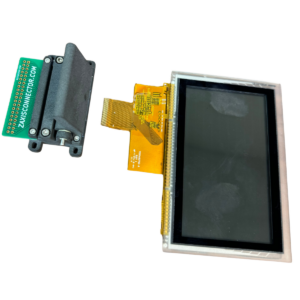
Most ZIF connectors are designed for installation, not repeated testing.
In a finished product, a flex cable may only be inserted once during assembly and never touched again. In that environment, a 20-50 cycle rating is more than adequate.
Production testing is a completely different situation.
A fixture operator may insert and remove a flex cable dozens or hundreds of times per day. Over weeks and months, that can quickly accumulate into thousands of insertion cycles.
This is where problems begin.
Why ZIF Connectors Fail So Quickly in Test Applications
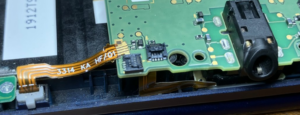
When manufacturers publish cycle life ratings, testing is typically performed under controlled laboratory conditions.
Real production environments introduce additional stress factors:
Side Loading
Operators rarely insert cables perfectly straight every time.
Small side loads applied during insertion can stress the connector housing and locking mechanism.
Latch Fatigue
Many ZIF connectors rely on small plastic locking bars.
Repeated opening and closing can eventually lead to:
- Broken latches
- Loose retention force
- Incomplete cable engagement
- Intermittent electrical connections
Contact Wear
Each insertion creates microscopic wear on the contact surfaces.
Over time, this can increase contact resistance and create unreliable test results.
Operator Variability
Different operators use different insertion techniques.
Some may pull on the cable.
Others may force the latch.
Even a well-trained production team introduces variability that laboratory testing does not account for.
Symptoms of a Worn-Out ZIF Connector
Many engineers don’t immediately recognize connector wear as the source of their problems.
Common symptoms include:
- Intermittent failures
- “No fault found” retests
- Random open circuits
- Inconsistent measurements
- Test failures that disappear after reconnecting the DUT
- Operators reporting they need to “wiggle the cable”
When these issues appear, engineers often spend hours troubleshooting software, electronics, or DUTs before discovering the connector is the root cause.
The Hidden Cost of Connector Wear
The cost of replacing a connector is usually small.
The real expense comes from:
- Lost production time
- Retesting assemblies
- Engineering troubleshooting
- False failures
- Reduced throughput
- Quality concerns
A connector that costs only a few dollars can easily create thousands of dollars in downtime over its lifetime.
When Should You Stop Using ZIF Connectors for Testing?
ZIF connectors remain an excellent solution for final products.
However, when a connection will be cycled repeatedly, a dedicated test interface is often a better choice.
Consider alternatives when:
- Testing occurs daily
- Multiple operators use the fixture
- Throughput is important
- Flex cables are expensive
- Reliability is critical
- Connector replacement has become routine maintenance
A Better Approach: Dedicated FFC Test Fixtures
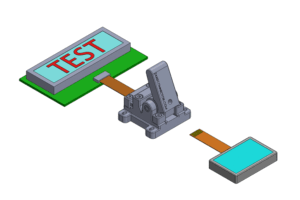
Instead of repeatedly cycling a production ZIF connector, many manufacturers use dedicated FFC test fixtures designed specifically for high-cycle operation.
These fixtures provide:
- Controlled alignment
- Consistent contact force
- Faster loading and unloading
- Reduced wear on DUT flex circuits
- Improved test repeatability
- Long service life
By separating the test interface from the product connector, engineers can dramatically improve fixture reliability while protecting the device under test.
Real-World Example
A common scenario involves a membrane switch or display assembly connected through a 0.5 mm pitch FFC cable.
Initially, the engineering team uses a standard ZIF connector mounted on a breakout PCB.
The setup works well for development.
Months later, the same setup is moved into production testing.
As cycle counts increase, operators begin reporting intermittent failures and unreliable connections.
After multiple troubleshooting sessions, the root cause turns out to be connector wear.
Replacing the ZIF temporarily fixes the problem, but the cycle repeats.
This pattern is common across many production environments and is often the point where a dedicated test fixture becomes justified.
Choosing the Right Solution
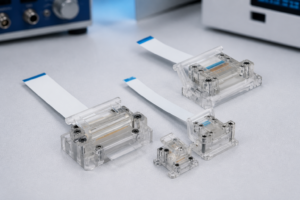
There is nothing wrong with ZIF connectors when used as intended.
The challenge occurs when installation connectors are asked to perform as production test interfaces.
Understanding the difference can help engineers avoid unnecessary downtime, improve test reliability, and reduce maintenance costs.
If your team is replacing ZIF connectors regularly or experiencing intermittent test failures, it may be time to evaluate a dedicated FFC test fixture designed for high-cycle operation.
Need Help With an FFC Testing Application?
Flexible Test specializes in custom FFC and flex PCB test fixtures for engineering validation, manufacturing, and production environments.
Whether you’re testing a membrane switch, display assembly, sensor flex, or custom FPC, we can help develop a reliable high-cycle interface for your application.
Contact us today to discuss your flex circuit testing requirements or request a custom fixture recommendation.