
Replacing a Fragile ZIF Connector with a High-Cycle FFC Interposer
Application
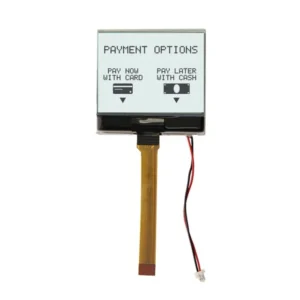
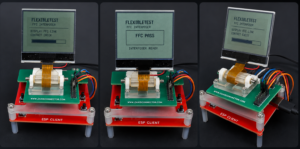
A Newhaven Display NHD-C160100DiZ-FSW graphic LCD uses a 14-position, 0.5 mm pitch FFC connection. During firmware development and hardware bring-up, the display needed to be connected and disconnected repeatedly while testing different software revisions, display drivers, and hardware configurations.
The initial setup used a standard FFC breakout board with a ZIF connector. While functional, the connector quickly became the weak point of the test setup.
The Challenge
Traditional ZIF connectors are designed for permanent or semi-permanent installations, not repetitive engineering and production testing.
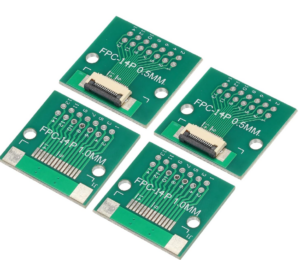
The team encountered several common issues:
- Delicate locking mechanisms that can be damaged by frequent use
- Increasing wear after repeated insertion cycles
- Operator-dependent insertion quality
- Difficult troubleshooting when intermittent contact issues occur
- Connector replacement requiring rework or replacement of the entire adapter board
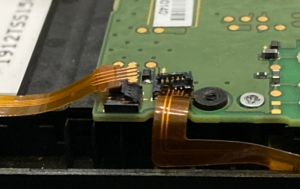
For a display under active development, the connector became a consumable item rather than a reliable test interface.
The Solution
A Flexible Test FFC interposer was used in place of the standard ZIF breakout board.
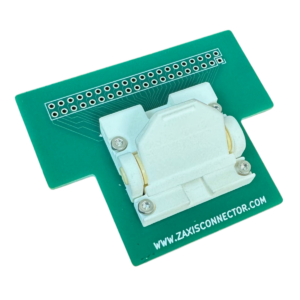
The display’s 0.5 mm pitch, 14-position FFC cable is simply placed into the interposer fixture and compressed against a field-replaceable elastomeric contact element.
Unlike a traditional connector, there are no fragile latches, contact springs, or insertion mechanisms to wear out.
Results
Improved Cycle Life
A typical ZIF connector may only survive a limited number of insertion cycles before mechanical wear begins affecting performance.
The Flexible Test interposer is designed for 10,000+ test cycles, making it well suited for:
- Firmware development
- Engineering validation
- Production testing
- Manufacturing fixtures
- Long-term reliability testing
Operator Friendly
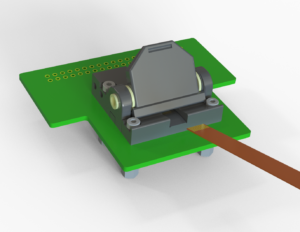
The interposer fixture allows operators to load and unload the FFC quickly and consistently.
Benefits include:
- No delicate latch to operate
- Consistent contact pressure
- Reduced training requirements
- Faster test setup
- Improved repeatability between operators
Reliable Electrical Contact
The elastomeric contact system provides multiple conductive paths across each circuit, helping maintain reliable connections throughout repeated testing.
This reduces:
- Intermittent opens
- False failures
- Connector-related troubleshooting
Field Replaceable Contacts
If the contact element eventually reaches end-of-life, the elastomeric contact can be replaced in the field.
Advantages include:
- Lower maintenance cost
- Minimal downtime
- No PCB rework
- No need to replace the complete fixture
Comparison
| Feature | Standard ZIF Connector | Flexible Test Interposer |
|---|---|---|
| Typical Test Cycle Life | 10-20 cycles in heavy development use | 10,000+ cycles |
| Operator Dependence | High | Low |
| Contact Consistency | Variable | Repeatable |
| Mechanical Wear | High | Minimal |
| Field Serviceable | No | Yes |
| Fixture Downtime | Higher | Lower |
| Designed for Repetitive Testing | No | Yes |
Conclusion
For high-cycle FFC/FPC testing, the connector itself often becomes the failure point long before the product under test.
By replacing a standard ZIF breakout board with a Flexible Test elastomeric interposer, the development team created a more reliable, operator-friendly interface capable of supporting 10,000+ insertion cycles, consistent electrical performance, and simple field maintenance.
The result is a test solution that allows engineers to focus on developing and validating their products rather than replacing worn-out connectors.
Stronger Fixtures for Demanding Applications
At Flexible Test, we’re continually looking for ways to improve the performance and durability of…
How Many Cycles Does a ZIF Connector Really Last?
Zero Insertion Force (ZIF) connectors are found everywhere. Displays, membrane…